Say hello to Mia and Jordan, they are planning a DIY home renovation. Feeling a bit overwhelmed, they turned to AI for inspiration, ideas, to plan before they stroked a paintbrush. They found AI can help choose the perfect color schemes, visualize ideal layouts, making their decisions easier and more efficient.
Using smart tools helped them visualize their dream space, explore material options, and even get expert design suggestions—all with just a few clicks.
What they discovered whether they’re tackling a kitchen makeover or a bathroom refresh, AI offers insights that saves time, reduce mistakes, while bringing their vision to life.
They were ready to renovate smarter, faster and not harder.
• New Homeowner Guide Review • DIY Case Study • 2026 and beyond AI Trends
🏡🤖 How you the DIY Renovator Can Use AI in 2026 — Before You Waste Thousands
Case Study: How one young couple, one dated house, made one smart decision: Used AI before they swung a hammer 🔨
Quick Takeaway: AI is not replacing contractors. AI is replacing guesswork. In 2026, smart DIY renovators will use room scans, 3D previews, material visualizers, rough budget tools, precision estimate calculators.
They will use narrow micro-apps to make better choices faster — then call pros only where safety, plumbing, electrical work, structure, or permits demand it.
🚨 The brutal truth: most DIY mistakes happen before the DIY starts
Most think the expensive part is demolition. It often is not. The expensive part is making the wrong plan with too much confidence. Jordan took woodworking in Grade 12. Now he’s an engineer, he thought how hard could it be?
Reality is ordering the wrong vanity width. It is choosing an oversized island that chokes the kitchen. It is moving plumbing because it “feels worth it” before learning what that really costs. It is buying materials from mood boards instead of from measurements.
That is where AI is getting scary useful. It lets new homeowners test, preview, compare, and reject bad ideas before money starts leaking out of the project. 💸💥
👩❤️👨 The case study: Mia and Jordan’s first-home renovation reality check
Mia and Jordan just bought their first house. They love the neighborhood. They love the yard potential. They do not love the dark kitchen, the awkward bathroom, the cluttered laundry zone, or the old finishes that make the house feel ten years older than it is.
Like many new homeowners, they start with confidence and chaos at the same time. They save screenshots. They watch videos. They say things like “we can probably do most of this ourselves.” Then they hit the wall every new DIY renovator hits:
“Wait… how do we know what will actually fit, what it will really cost, and what parts could go dangerously wrong?”
That question changes everything.
🔥 Their new rule: AI first for planning, pros first for danger zones
Mia and Jordan build a simple system:
🟢 Use AI for ideas, measuring help, layouts, previews, shopping, and rough budgets
🟡 Use AI + human judgment for material choices, scope decisions, and “is this worth it?” questions
🔴 Use licensed pros for electrical, plumbing moves, gas work, structure, waterproofing failure, and permit-heavy work
📊 Where AI is strongest, most useful in a renovation
Inspiration and style direction 😍
Layout testing and room flow 🚶♀️🚪
Material comparison and finish previews 🎨🧱
Rough budgeting and estimate planning 💵
🟥🟥🟥🟥 Helpful, but not final
Electrical, plumbing, structural execution ⚡🚿🧱
🟪 Planning only — pros still own this
📱 IKEA Kreativ and the rise of “see it before you buy it” renovation
One of the biggest changes in home improvement is this: homeowners no longer have to imagine everything in their heads. Tools like
IKEA Kreativ made room scanning and 3D space visualization feel normal, not futuristic. That matters because many expensive renovation regrets start as innocent visual mistakes.
Mia thinks she wants bright white cabinets, a cool gray backsplash, and black hardware because that combo looks sharp online. But once she sees a room-level preview mindset in action, she realizes her own space does not behave like the showroom photos.
The light is different. The walls are warmer. The floor tone changes everything. What looked “clean and modern” in inspiration shots suddenly feels cold and flat in a real-world context.
AI win: it catches style mistakes while they are still free to fix.
📐 Houzz Pro and the layout mistake that almost ruined their kitchen
Jordan is convinced that a larger island will make the kitchen feel high-end. Bigger island. More storage. Better resale. Strong move, right?
Wrong.
Once he starts looking at room-planning workflows like those described by
Houzz Pro, it becomes obvious that a “bigger island” is not just a look choice. It is a circulation choice. It affects walkways, appliance clearance, traffic flow, and how two people move in the space at once.
The dream island turns into a kitchen traffic jam. The fridge door becomes awkward. The dishwasher zone gets cramped. What felt luxurious in theory becomes annoying in reality.
⚡ Kitchen island reality chart
Looks expensive in photos ✨
Blocks key walkway ❌
Makes fridge access awkward ❌
Feels custom at first glance ✅
Feels annoying every day ❌
AI win: it does not just help you decorate a room. It helps you avoid designing a room that fights you every day.
🛁 Block Renovation and the bathroom move they wisely did not make
The bathroom looks small, but the bigger problem is that it feels badly planned. Mia hates the vanity. Jordan hates the lighting. Both think the toilet placement is awkward. They start wondering if they should move everything.
This is where bathroom visualization becomes valuable. A tool like the
Block Renovation Bathroom Remodel Visualizer fits the exact problem: see how tiles, vanities, lighting, surfaces, and fixture placement could change the room
before anyone starts ripping things out.
Once Mia and Jordan think through the room this way, a better answer appears. They do not need to move everything. They need to move the room’s feeling. Bigger mirror. Better vanity proportions. Cleaner lighting. Smarter storage. Stronger surface choices. Less clutter.
They stop chasing a full plumbing relocation and start chasing a better visual and functional balance. That is a major budget-saving pivot.
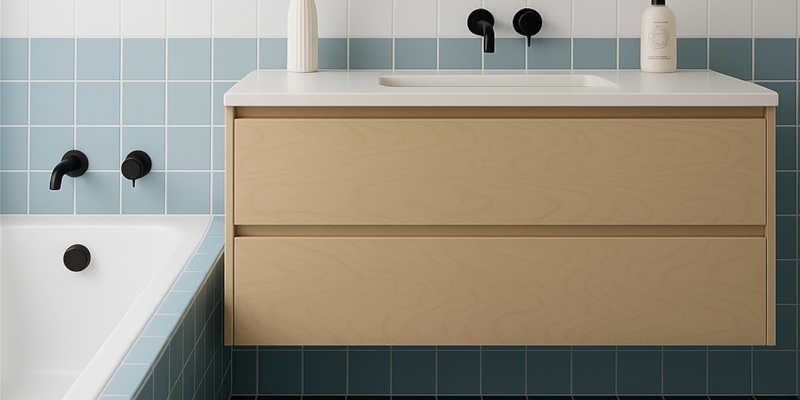
🛁 Bathroom decision board
Move toilet? Looks cleaner 😍 / Costs much more 💸
Replace vanity? High visual impact 🔥 / Lower risk ✅
Upgrade lighting? Huge mood change 💡 / Strong ROI ✅
Improve mirror/storage? Makes small room feel bigger 🪞 / DIY-friendly 🛠️
📸 Hover, room data, and why measurements are becoming a superpower
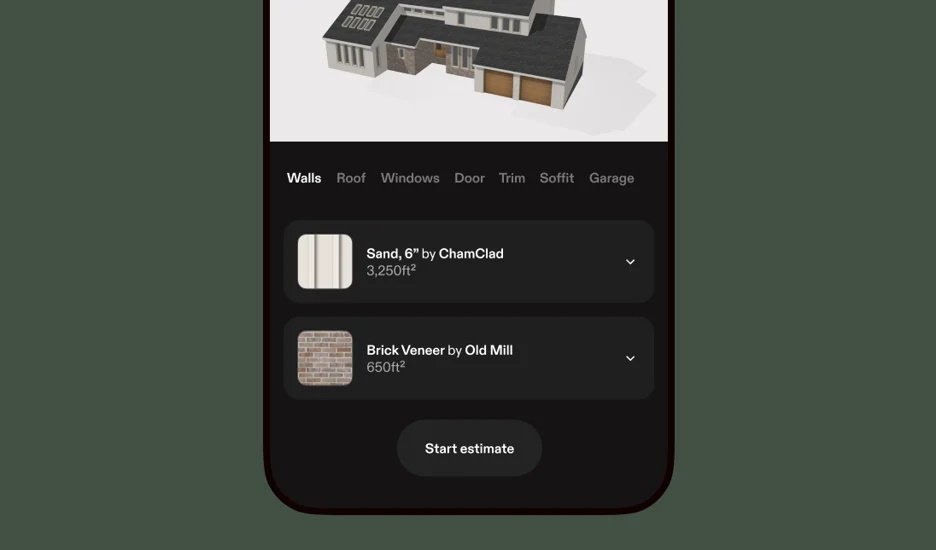
Old-school DIY often fails because the homeowner is trying to make decisions without a real model of the house. New-school AI-assisted DIY starts by capturing the room, the wall, the exterior, the openings, the dimensions, and then turning that information into something usable.
That is why room scanning and 3D measurement tools matter so much. When your house becomes a measured digital environment instead of a fuzzy mental picture, your renovation stops being all vibes and starts becoming strategy.
Mia’s quote: “This is the first time our house feels like data instead of a mystery.” 📏
That one shift changes shopping, layout choices, and even how you talk to contractors.
🖼️ Example visual from
Hover
💵 Budget shock prevention: AI estimates are powerful, but they are not a magic contract
One of the most useful things AI can do in a renovation is turn a vague wish list into rough numbers. That alone makes it valuable. But homeowners have to stay emotionally honest about what rough numbers really are.
Mia and Jordan use AI budgeting and estimate-style tools as filters, not promises. If the “dream version” of the bathroom blows past what they can comfortably spend, they do not fight that reality.
They use it. They compare what happens if they keep plumbing in place. They compare what happens if they swap materials. They compare a full gut job versus a high-impact cosmetic upgrade.
💸 Budget honesty chart
“AI says it costs X, so that’s final.” ❌ Dangerous mindset
“AI gives us a planning range and comparison tool.” ✅ Smart mindset
“A contractor confirms the real site conditions and actual price.” ✅ Best mindset
That is the mindset that keeps people from falling in love with a plan their bank account already hates.
🧩 Micro-apps and micro-SaaS: the tiny tools that may quietly run the next generation of DIY renovation
Big all-in-one platforms get most of the attention. But a lot of the real innovation is going to happen in smaller, narrow tools. Tiny apps that do one thing really well.
One tool for room scans. One for paint matching. One for comparing contractor scopes. One for cabinet sizing. One for turning an old floor plan into a 3D room. One for estimating tile and trim quantities. One for building a renovation punch list.
That is why micro-apps and micro-SaaS matter. Renovation is full of annoying, narrow, high-friction problems. Those are perfect targets for focused AI tools.
🚀 Micro-app ideas homeowners will probably see more of
📏 Shower niche spacing planner
🎨 Paint color matcher from real room photos
🧱 Tile layout and waste calculator
🛋️ Furniture and clearance checker
🧾 Contractor quote comparison helper
🏡 Exterior facelift visualizer
📦 Materials list builder from room scans
🔮 Predictions for 2026 and beyond: where this is obviously heading
You can already see the next wave forming. Right now, homeowners often jump between separate tools for scanning, layout ideas, shopping, pricing, and contractor discussions. That is not where this ends.
🔭 Future-horizon prediction board
1. Blueprint-to-3D gets much faster — upload a floor plan, listing photo, or scan and get a usable room model in minutes
2. Kitchen and bath design becomes “good / better / best” by default — same room, three price bands, one click
3. Shopping becomes room-based — homeowners will buy from a model of their space, not from isolated product pages
4. Contractor communication gets cleaner — room scans, preferred finishes, and rough scopes will travel together instead of living in chaotic text chains
5. AI becomes the renovation translator — not replacing plumbers or electricians, but helping homeowners ask better questions and avoid sloppy decisions
In plain English: the next big leap is not just “better renders.” It is connected planning. Scan. preview. compare. rough-price. then hand off.
⚡The red-line zone: when AI stops helping and a licensed pro must take over
This is the most important part of the whole article.
AI can help homeowners think more clearly. It cannot safely install a new circuit, relocate drain lines, evaluate a load-bearing wall, or make permit obligations disappear. That is why Mia and Jordan draw a bright line between planning tools and dangerous execution.
🚨 DIY risk ladder
🟢 Safer DIY: paint, styling, cabinet hardware, shelving, finish comparison, room planning
🟡 Medium-risk: backsplash, vanity swaps, some trim or light fixture updates if skill is real
🟠 High-risk: waterproofing, major subfloor issues, plumbing fixture moves, new circuits
🔴 Pro-only territory: electrical panel work, gas, structure, major plumbing reroutes, heavy permit-sensitive work
That is not fear. That is discipline.
🧠 The biggest mindset shift for new homeowners
Mia and Jordan finally realize something that experienced renovators already know:
AI is best at the visible layer. Pros still own the invisible layer.
Visible layer: layout, color, finish, lighting feel, cabinet look, tile style, shopping confidence, storage ideas, furniture fit.
Invisible layer: pipes, wires, venting, drainage slope, structure, waterproofing, code, permits, hidden defects.
Once they understand that split, the whole project becomes calmer. They stop asking AI to answer plumber questions. They stop expecting the electrician to care about backsplash tone. Everyone does the job they are best at.
✅ Pros and ❌ Cons of AI for DIY home improvement
✅ Pros
💚 Helps homeowners see the room before spending money
💚 Makes layout mistakes easier to catch early
💚 Reduces random, regret-filled shopping
💚 Gives couples a shared visual language
💚 Helps create better questions for contractors
💚 Makes budgeting comparisons faster and clearer
❌ Cons
💥 Pretty renders can create fake confidence
💥 AI estimates can feel more final than they really are
💥 Older homes hide problems no visualizer can see
💥 Some tools are still better at inspiration than true construction detail
💥 Bad inputs still create bad outputs
💥 Some homeowners will misuse AI as an excuse to overreach into dangerous work
📊Final scorecard: what Mia and Jordan actually did
Kitchen style direction with AI previews ✅
Kitchen island size tested before buying anything ✅
Bathroom full relocation idea rejected after smarter review ✅
Lighting and vanity upgrades prioritized for visual payoff ✅
Rough budget ranges used to cut unrealistic ideas ✅
Danger-zone work flagged for licensed pros ✅
Result: not a flashy miracle makeover — a smarter, safer, higher-confidence renovation plan that protects their money, sanity, and long-term home value.
🙋 FAQ
How can DIY renovators use AI in 2026 and beyond?
They can use AI to scan rooms, visualize kitchens and bathrooms, compare layouts, test finishes, create rough budgets, and prepare smarter contractor conversations before construction starts.
Can AI turn a room scan into a 3D renovation preview?
Yes. That is one of the biggest changes happening right now. Room scanning, digital modeling, photo realistic previews, and floor-plan workflows are becoming much more normal for homeowners.
Should homeowners trust AI renovation estimates?
They should trust them as planning numbers, not as final signed prices. AI is great for comparison and direction. Final pricing still needs contractor review.
When should a DIY renovator hire a contractor?
Homeowners should hire qualified professionals for electrical changes, plumbing moves, structural work, gas work, waterproofing failures, and permit-sensitive installations.
What are micro-apps and micro-SaaS tools in renovation?
They are small focused tools that solve one narrow problem well, such as paint matching, room scanning, fixture visualization, estimate comparison, or materials planning.
What is the future of AI in DIY home improvement?
The future is connected planning: scan the room, generate a 3D view, compare styles and layouts, build a rough budget, then send a cleaner scope to a contractor.
🏁Final verdict:
Mia and Jordan do not “win” because AI magically renovates their home. They win because AI helps them avoid bad decisions while the bad decisions are still cheap.
That is the real story of AI for DIY renovators in 2026 and beyond.
The smartest DIY renovator is no longer the one who tries to do everything.
The smartest DIY renovator is the one who knows what to preview, what to measure, what to compare, what to skip, what to budget, and what to hand off. 🤖🏡💥
That is how you protect your budget. That is how you protect your timeline. And honestly? That is how you protect your marriage during a renovation too. 😅❤️
🔗 Key platforms and entities mentioned